5 Signs Your RO Membrane Needs Replacement
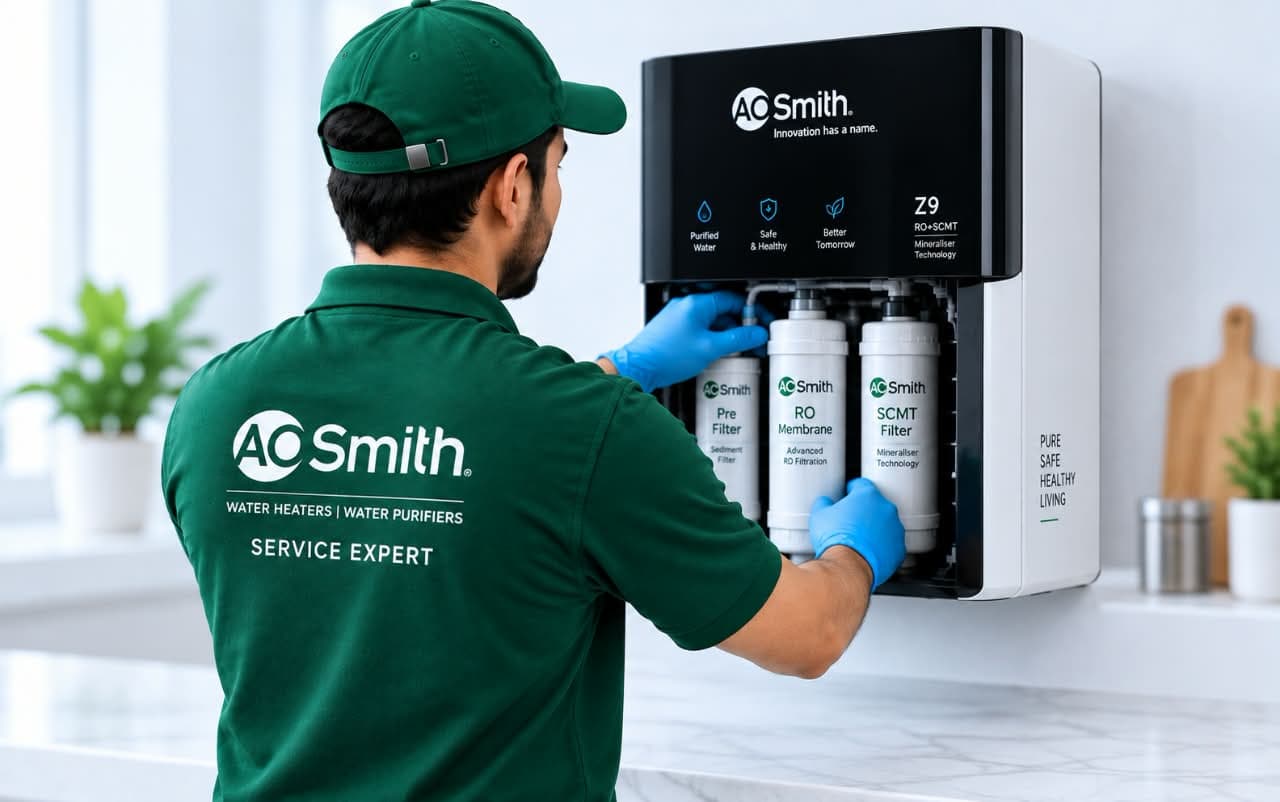
Sign 1: Output Water Taste Has Turned Salty, Bitter, or Hard
Pure RO water typically has a mild, sweet taste with a TDS (Total Dissolved Solids) count between 60 and 120 ppm. If drinking water starts tasting slightly brackish, salty, or heavy on the tongue, dissolved salts are bleeding right through micro-tears in the thin-film composite (TFC) layers.
A quick 10-second digital TDS meter test by a technician will reveal whether the membrane is still rejecting 90%+ of input contaminants.
Sign 2: Water Output Flow Has Slowed to a Painful Trickle
Under normal pump pressure (60 to 80 PSI), an 8-liter storage tank takes 40 to 60 minutes to fill completely. If your purifier takes 3 to 4 hours or produces only a thin pencil-lead stream despite adequate water pressure, the membrane pores are clogged with calcium silicate scale and bio-slime.
Sign 3: Pure-to-Waste Water Ratio Has Completely Skewed
Standard domestic RO systems discharge approximately 2.5 to 3 glasses of reject water for every 1 glass of purified water. When the membrane chokes, water cannot squeeze through the microscopic pores and 100% of incoming water diverts out the waste pipe.
If your reject pipe runs for hours without the storage tank filling up, your membrane is almost certainly choked.
Sign 4: TDS Level is Over 150 ppm from Borewell Water
While Cauvery municipal water with an input TDS of 140 ppm will naturally yield output around 25–40 ppm, borewell and tanker supply in Bengaluru often averages 700–1,200 ppm. If your output TDS exceeds 150–200 ppm from high-hardness raw water, heavy metals like arsenic, lead, and fluorides are bypassing filtration.
Sign 5: The Booster Pump Runs Non-Stop & Vibrates Heavily
Modern purifiers utilize an auto-cut float valve and a high-pressure switch (HPS). When water cannot fill the tank, the pressure switch never triggers shutoff. The booster pump continues running for 8–12 hours consecutively, causing vibration, buzzing noise, and eventual transformer or pump burnout.
Need urgent repair for your AO Smith?
Certified technicians arrive at your home within 60–90 minutes with genuine spare parts and a 30-day labor warranty.