What Is the Ideal TDS Level for Drinking Water in Bangalore?
1. What Do BIS (Bureau of Indian Standards) and WHO Recommend?
According to BIS standard IS 10500:2012, the desirable limit for TDS in drinking water is up to 500 ppm, with a maximum permissible limit of 2,000 ppm in the absence of an alternate source.
For optimum palatability and hydration, the World Health Organization (WHO) rates water between 80 ppm and 150 ppm as excellent and tasty.
- Below 50 ppm: Demineralized, flat taste, acidic pH (needs mineralizer or TDS adjuster)
- 80 to 150 ppm: Ideal golden zone for daily drinking water with healthy mineral content
- 150 to 300 ppm: Good potable water (standard Cauvery municipal tap)
- Above 500 ppm: Hard water causing heavy kidney load and scaling in kettles
2. Why Pure Zero TDS Water Is NOT Recommended for Daily Drinking
When RO membranes strip 99% of dissolved matter down to 10–20 ppm without remineralization, the water turns slightly acidic (pH 5.8–6.4) and aggressive. Drinking demineralized water for prolonged periods can leech essential minerals from your body and cause fatigue.
We recommend installing an active Mineral Alkaline / TDS Controller cartridge to stabilize output TDS between 80 and 120 ppm with a healthy pH of 7.4–8.0.
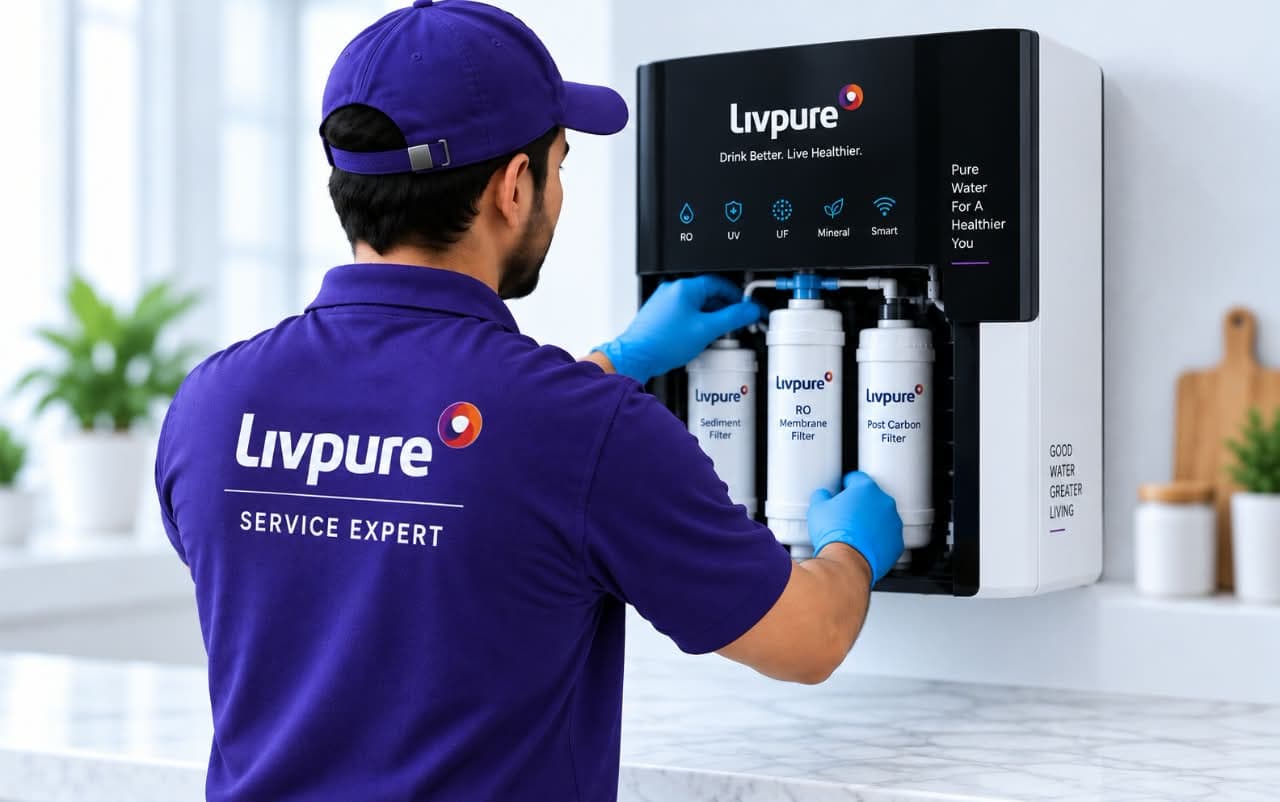
Need urgent repair for your Livpure?
Certified technicians arrive at your home within 60–90 minutes with genuine spare parts and a 30-day labor warranty.